Nigeria’s Private Sector Expands Further in June, Led by Agriculture and Stable FX
Global Macro Highlights
U.S. Trade Deficit Widens Sharply in May Amid Export Decline
According to the U.S. Bureau of Economic Analysis, the U.S. trade deficit widened by 18.7% in May to USD71.50bn from USD60.30bn in April. This increase was driven primarily by a sharp drop in exports and a correction in earlier import surges. A reversal is expected in the second quarter, though the anticipated boost from trade is likely to be partially offset by tepid consumer spending.
U.S. Senate Passes $3.3trn Bill, Raises Debt Ceiling as Public Debt Soars
The U.S. Senate has passed a USD3.30trn tax and spending bill that permanently extends 2017 tax cuts, increases defense and immigration budgets, and cuts USD930bn from welfare programs to the national debt. To finance the plan, Congress will raise the debt ceiling by USD5.00trn, pushing public debt to over 130.04% of GDP by 2034. While equity markets welcomed the pro-growth narrative, bond markets have begun to reprice risk amid rising Treasury issuance.
Kenya’s Economy Maintains 4.9% Growth in Q1 Amid Sectoral Imbalances
Kenya’s GDP grew 4.9% YoY in the Q1:2025, matching the same growth pace as Q1:2024, driven by growth in sectors such as agriculture and manufacturing. The performance was supported by favorable weather conditions in most parts of the country involved in crop and animal production. However, growth was offset by weakness in tourism, financial services, and manufacturing, highlighting structural vulnerabilities.
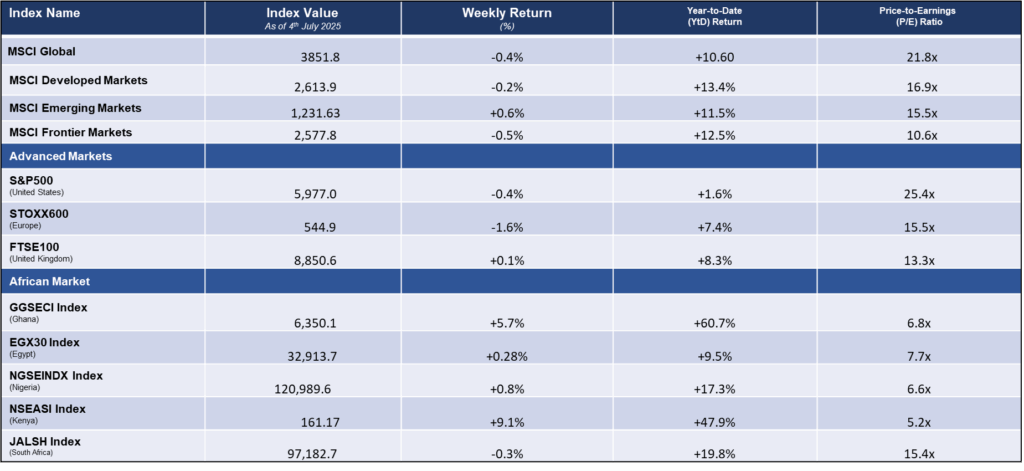
Global Equities Market
Weekly Performance of Major Global Indices
Domestic Events
Nigeria’s Private Sector Expands Further in June, Led by Agriculture and Stable FX
The latest Purchasing Managers’ Index (PMI) report from the Central Bank of Nigeria (CBN) showed a continued expansion in Nigeria’s private sector, with the headline PMI rising slightly to 52.3pts in June from 52.1pts in May. Growth was broad-based across key sectors: Industry (51.4pts), Services (51.3pts), and Agriculture, which led the expansion at 55.4pts. The improvement in the PMI reflects resilient business activity, supported by easing inflationary pressures and relatively stable foreign exchange conditions. Looking ahead, we expect sustained private sector growth in the near term, supported by moderating inflation and reduced FX volatility, which should help businesses better plan and manage their operations. However, lingering challenges such as structural supply bottlenecks, elevated borrowing costs, and weak consumer purchasing power may still limit the pace of growth.
MTN Unveils West Africa’s Largest Tier III Data Centre, Targets Enterprise Growth
MTN Nigeria has launched West Africa’s largest Tier III data center (named the Sifiso Dabengwa Data Centre) in Lagos, with an initial capacity of 4.5 megawatts equipped with cloud infrastructure that the telco claims rivals’ offerings from Amazon, Microsoft, and Google, scalable to 9MW. This investment marks MTN’s shift into enterprise digital services, supporting Nigeria’s growing demand for data sovereignty, latency reduction, and infrastructure localization. It positions the telecom for long-term growth in high-margin B2B services and cross-sector fintech integration.
GTCO Lists on London Stock Exchange, Raises $100mn for Recapitalization Drive
GTCO Holdings has become the first Nigerian banking group to list its ordinary shares directly on the London Stock Exchange, raising USD100.0mn to support recapitalization. The listing replaces the bank’s inactive GDR program and aligns with the Central Bank’s NGN500.00bn capital requirement for internationally licensed banks. The move improves access to global investors, enhances liquidity, and strengthens GTCO’s positioning across asset management, pensions, and payments. It also sets a precedent for other Nigerian financial institutions seeking offshore equity market access.
Nigerian Banks Resume International Transactions as FX Inflows Improve
Nigerian banks have resumed international transactions on naira-denominated debit cards, marking the end of a suspension that began in 2022. UBA and Wema Bank were among the first to announce reinstatement of cross-border payments, enabling cardholders to make purchases on international platforms and withdraw foreign currency via ATMs. What changed recently is the notable improvement in Nigeria’s foreign exchange position. Since early 2025, FX inflows have been rising sharply, due to a combination of higher oil prices, reforms to remittance inflow policies, and the Central Bank’s decision to liberalize the FX market.
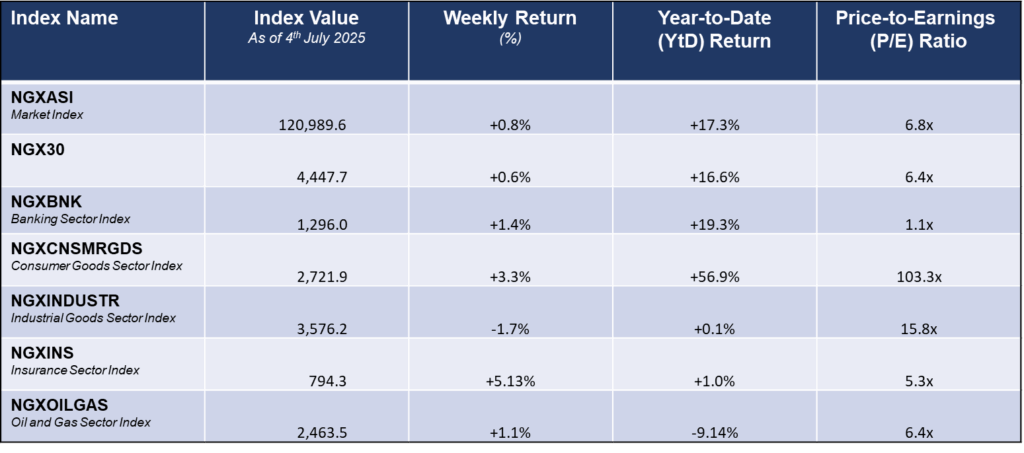
Equities Market – Sectorial Performance
Weekly Performance of Sectorial Indices
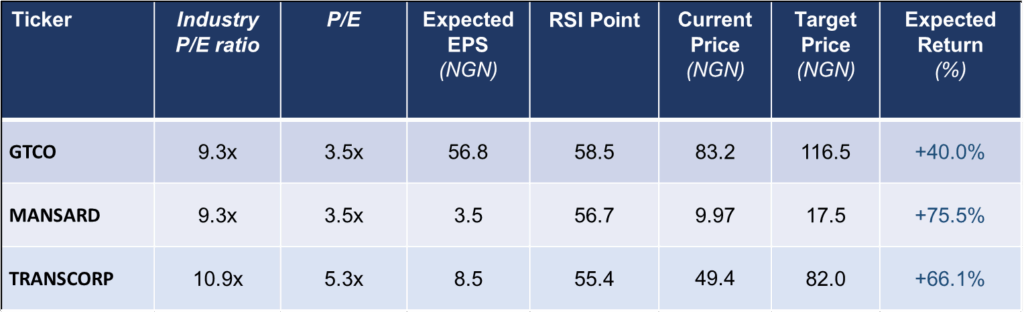
Stocks Top Picks for the Week
Fixed Income Opportunities for the week