Nigeria’s Debt Hits ₦149.4trn in Q1:2025, Driven by Domestic Borrowing Surge

Global Macro Highlights
US-China Trade Deal Eases Tensions, Unlocks Rare Earth Supply Chain
The U.S and China has signed a new trade deal which includes an agreement for China to deliver rare earth materials to the US in exchange for Washington easing its own restrictions on certain export to China. The export of rare earth mineral was restricted by China during the tariff driven trade war in May and the US a major importer of these minerals, faced significant production across industries affected. This trade deal will foster improved access to rare earth for US manufacturers, reduce input cost pressures and also de-escalate the trade tensions between the US and China in the short-term. Looking ahead, we expect this development to help temper inflation and boost production.
UK Economy Shows Modest Growth as Services Rebound, Manufacturing Improves Slightly
The UK composite PMI rose to a three-month high of 50.7 in June 2025 (vs. 50.3 in May), signaling modest expansion in the UK economy. This improvement was driven by the services sector which climbed to 51.3, the growth in the services sector was as a result of improved domestic demand and a rebound in new orders following the returning client confidence from the low levels of April’s due to the tariff pause. Meanwhile, the manufacturing sector remained in contractionary levels of 47.7 however this is an improvement from the previous month where it was 46.4. Looking ahead, we expect more expansion in the UK economy hinged on easing macroeconomic environment and stability in the global trade and global economy.
Israel-Iran Ceasefire Cools Tensions, Oil Prices Ease as Supply Risks Fade
Last week the Israel and Iran has come to ceasefire agreement after the 13-day escalation between the two countries in the middle east. The ceasefire agreement was initiated by the US government, and it brings a temporal end to the heated exchange between Israel and Iran while further negotiation and peace agreement is set to take place. Meanwhile, oil Prices which surged to around USD74.0 -76.0bp as a result of the war, moderated to USD67.68pb after the ceasefire announcement. Looking ahead we expect, global oil price to maintain its current levels. Also, we expect improved global trade as the threat around supply disruption has been dissolved.
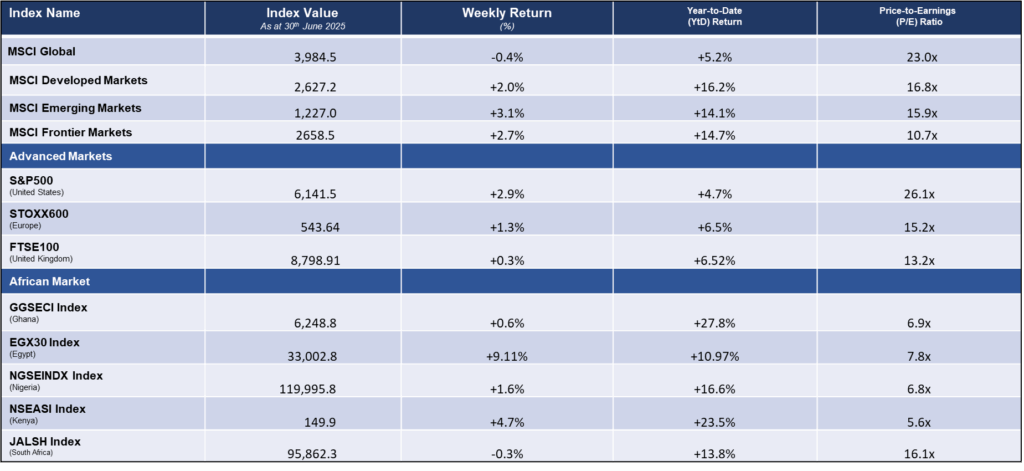
Global Equities Market – Sectorial Performance
Weekly Performance of Major Global Indices
Domestic Events
FG Enacts Landmark Tax Reforms to Boost Revenue, Ease Burden on Low-Income Earners
The federal government has signed four tax reform bills which takes effect from January 1st 2026 into law. These bills include the Nigeria Tax Bill, Tax Administration Bill, Revenue Service Bill, and the Joint Revenue Board Bill. These bills aims to unify Nigeria’s framework across the federal, state and local levels of government, bridge the tax gap, increase tax revenue, reduce tax burdens on low-income earners and small business owners, and raise Nigeria’s tax to GDP ratio. By streamlining the nations tax structure and enhancing compliance mechanisms, we expect an increase in tax revenue, tax contribution to total revenue thereby reducing the budget deficit and the tax-to-GDP ratio. We also expect these reforms to help cushion inflation as key staples including food and transportation have been exempted from VAT.
Nigeria Records $2.77bn BOP Deficit in Q1:2025 Amid Rising FPI Outflows
According to CBN, Nigeria had a balance of payment deficit of USD 2.77bn in Q1:2025, despite recording a current account surplus. This BOP position was primarily driven by a sharp increase in FPI exit which resulted in a net divestment of USD5.03bn in FPI inflows during the period. Although, the current account recorded a surplus of USD3.7bn due to a stronger growth in oil and non-oil exports compared to imports during the period it wasn’t enough to offset the deficit in financial account. External reserves declined to USD37.82bn from USD40.19bn in Q4:2024, due to the interventions of the CBN in the FX market and external debt servicing in Q1:2025.
Nigeria’s Debt Hits ₦149.4trn in Q1:2025, Driven by Domestic Borrowing Surge
Nigeria’s total debt portfolio as at March 31st 2024 stood at NGN149.4trn, a 3.3% QoQ increase from NGN144.67trn in December 2024. This uptick in the debt stock was driven primarily by an increase in domestic debt from NGN70.4trn in December 2024 to NGN74.9trn in March. Meanwhile external debt increased only marginally by 0.49% QoQ from 7NGN70.3trn to NGN70.6trn in March 2025. This has led to a surge in debt servicing cost, particularly the domestic debt servicing which jumped by 64.8% to NGN2.6trn. We expect a sustained elevated debt levels given the budget deficit and the weakening oil prices.
ELLALAKES PLC to Raise ₦250bn for Asset Expansion, Eyes Growth to Rival Industry Giants
On the corporate scene, ELLALAKES PLC plans to raise capital of up to NGN250bn via private placement, public offer or any other equity issuance. The company aim to acquire a significant agricultural asset with this capital they want to raise. This suggest a move to deleverage even though their capital structure is already majorly composed of equity, as they also plan to convert some debt to equity. While this awaits the approval of capital raise we could see their asset increase significantly putting them in the level of OKOMU and PRESCO asset wise. Their share capital will also increase again, thereby dilution in their shareholding structure.
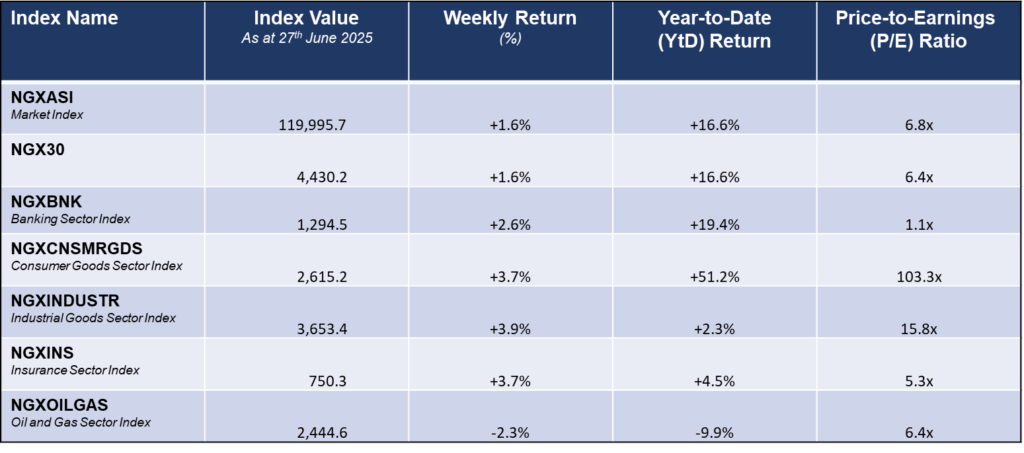
Equities Market – Sectorial Performance
Weekly Performance of Sectorial Indices
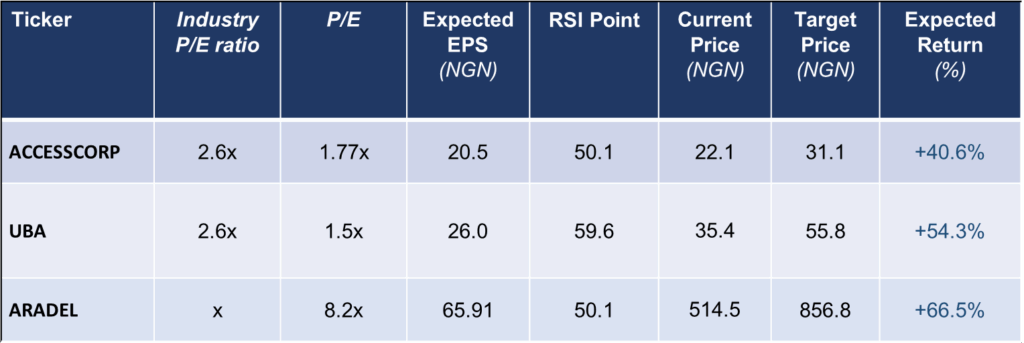
Stocks Top Picks for the Week
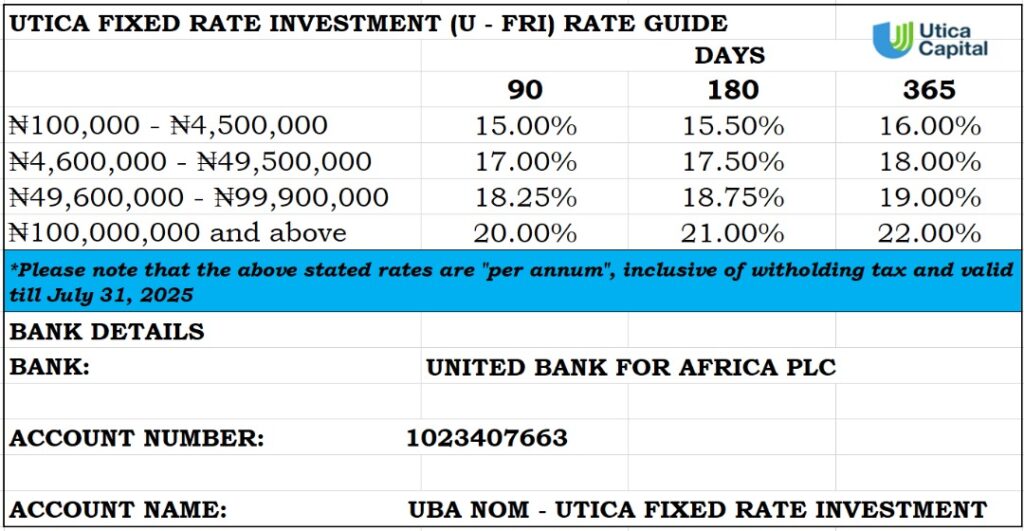
Fixed Income Opportunities for the week